b160 (영한)
|
P.1772 – §1 On Sunday morning, September 18, Andrew This Greek had |
named Rodan, 로단이라 이름하는 theologians from Alexandria Clement, Origen, Pantaenus was first president of Catechetical School of Alexandria. (작품은 남아 있지 않다) Clement was a student of Pantaenus. Apostolic Fathers, 신약 이후의 저술. |
| 1. RODAN’S GREEK PHILOSOPHY – P.1772 P.1772 – §2 Early Monday morning, Rodan began a series of ten addresses to Nathaniel, Thomas, and a group of some two dozen believers who chanced to be at Magadan. These talks, condensed, combined, and restated in modern phraseology, present the following thoughts for consideration:
|
address, 강연, 연설 |
| P.1772 – §3 Human life consists in three great drives–urges, desires, and lures. Strong character, commanding personality, is only acquired by converting the natural urge of life into the social art of living, by transforming present desires into those higher longings which are capable of lasting attainment, while the commonplace lure of existence must be transferred from one’s conventional and established ideas to the higher realms of unexplored ideas and undiscovered ideals. |
drive, 추진력, 원동력 lure, 유혹하는 물건 social art of living, 살아가는 기술 vita brevis, ars longa ≠예술은 짧다 present desires, 현재의 욕구를 참음으로 더 나은 미래를 추구 = 투자 |
| P.1772 – §4 The more complex civilization becomes, the more difficult will become the art of living. The more rapid the changes in social usage, the more complicated will become the task of character development. Every ten generations mankind must learn anew the art of living if progress is to continue. And if man becomes so ingenious that he more rapidly adds to the complexities of society, the art of living will need to be remastered in less time, perhaps every single generation. If the evolution of the art of living fails to keep pace with the technique of existence, humanity will quickly revert to the simple urge of living–the attainment of the satisfaction of present desires. Thus will humanity remain immature; society will fail in growing up to full maturity. |
살아가는 기술이 더 복잡해진다. character development, 인품의 개발 |
|
P.1773 – §1 Social maturity is equivalent to the degree to which But the true badge of social maturity |
disquiet, 불안하게 만들다. 미지의 현실은 사람을 불안하게 만든다 |
| P.1773 – §2 Animals respond nobly to the urge of life, but only man can attain the art of living, albeit the majority of mankind only experience the animal urge to live. Animals know only this blind and instinctive urge; man is capable of transcending this urge to natural function. Man may elect to live upon the high plane of intelligent art, even that of celestial joy and spiritual ecstasy. Animals make no inquiry into the purposes of life; therefore they never worry, neither do they commit suicide. Suicide among men testifies that such beings have emerged from the purely animal stage of existence, and to the further fact that the exploratory efforts of such human beings have failed to attain the artistic levels of mortal experience. Animals know not the meaning of life; man not only possesses capacity for the recognition of values and the comprehension of meanings, but he also is conscious of the meaning of meanings–he is self-conscious of insight. |
ecstasy, 황홀경 |
| P.1773 – §3 When men dare to forsake a life of natural craving for one of adventurous art and uncertain logic, they must expect to suffer the consequent hazards of emotional casualties–conflicts, unhappiness, and uncertainties–at least until the time of their attainment of some degree of intellectual and emotional maturity. Discouragement, worry, and indolence are positive evidence of moral immaturity. Human society is confronted with two problems: attainment of the maturity of the individual and attainment of the maturity of the race. The mature human being soon begins to look upon all other mortals with feelings of tenderness and with emotions of tolerance. Mature men view immature folks with the love and consideration that parents bear their children. |
hazards, 위험 성숙한 인간은 부모가 자식을 보듯 사람을 바라본다. |
| P.1773 – §4 Successful living is nothing more or less than the art of the mastery of dependable techniques for solving common problems. The first step in the solution of any problem is to locate the difficulty, to isolate the problem, and frankly to recognize its nature and gravity. The great mistake is that, when life problems excite our profound fears, we refuse to recognize them. Likewise, when the acknowledgment of our difficulties entails the reduction of our long-cherished conceit, the admission of envy, or the abandonment of deep-seated prejudices, the average person prefers to cling to the old illusions of safety and to the long-cherished false feelings of security. Only a brave person is willing honestly to admit, and fearlessly to face, what a sincere and logical mind discovers. |
prejudice < pre + judicare (judge), 편견 |
| P.1773 – §5 The wise and effective solution of any problem demands that the mind shall be free from bias, passion, and all other purely personal prejudices which might interfere with the disinterested survey of the actual factors that go to make up the problem presenting itself for solution. The solution of life problems requires courage and sincerity. Only honest and brave individuals are able to follow valiantly through the perplexing and confusing maze of living to where the logic of a fearless mind may lead. And this emancipation of the mind and soul can never be effected without the driving power of an intelligent enthusiasm which borders on religious zeal. It requires the lure of a great ideal to drive man on in P.1774 – §0 the pursuit of a goal which is beset with difficult material problems and manifold intellectual hazards. |
disinterested, 무관심한, 사심 없는 driving power, 추진력 border on (가까이 가다) beset, 시달리다
|
| P.1774 – §1 Even though you are effectively armed to meet the difficult situations of life, you can hardly expect success unless you are equipped with that wisdom of mind and charm of personality which enable you to win the hearty support and co-operation of your fellows. You cannot hope for a large measure of success in either secular or religious work unless you can learn how to persuade your fellows, to prevail with men. You simply must have tact and tolerance.
|
large measure (상당량) 동료를 설득할 줄 알아야 큰 성공을 바랄 수 있다. 요령과 관용이 필요하다. |
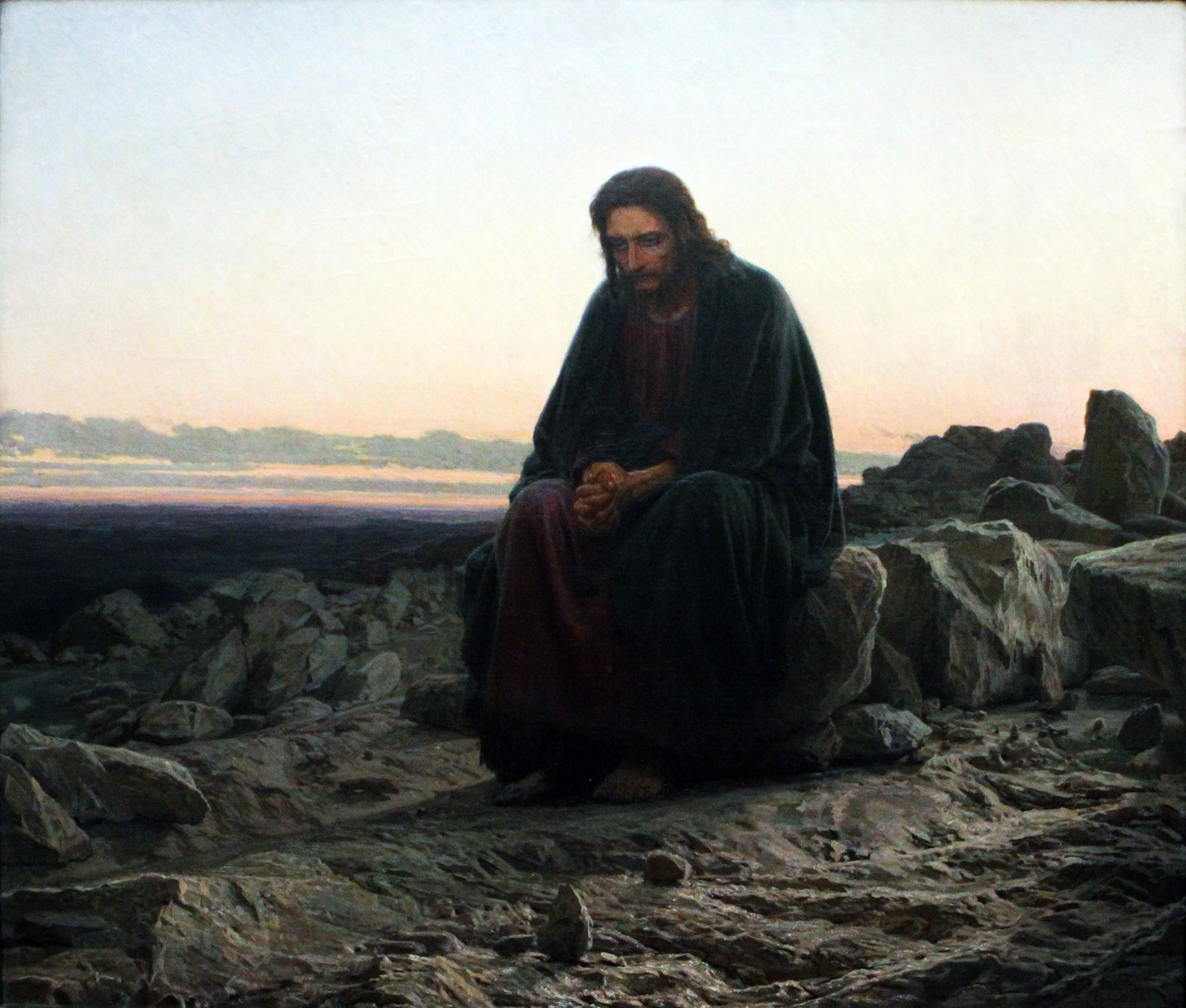
| P.1774 – §2 But the greatest of all methods of problem solving I have learned from Jesus, your Master. I refer to that which he so consistently practices, and which he has so faithfully taught you, the isolation of worshipful meditation. In this habit of Jesus’ going off so frequently by himself to commune with the Father in heaven is to be found the technique, not only of gathering strength and wisdom for the ordinary conflicts of living, but also of appropriating the energy for the solution of the higher problems of a moral and spiritual nature. But even correct methods of solving problems will not compensate for inherent defects of personality or atone for the absence of the hunger and thirst for true righteousness. |
strength, wisdom + energy. |
| P.1774 – §3 I am deeply impressed with the custom of Jesus in going apart by himself to engage in these seasons of solitary survey of the problems of living; to seek for new stores of wisdom and energy for meeting the manifold demands of social service; to quicken and deepen the supreme purpose of living by actually subjecting the total personality to the consciousness of contacting with divinity; to grasp for possession of new and better methods of adjusting oneself to the ever-changing situations of living existence; to effect those vital reconstructions and readjustments of one’s personal attitudes which are so essential to enhanced insight into everything worth while and real; and to do all of this with an eye single to the glory of God–to breathe in sincerity your Master’s favorite prayer, "Not my will, but yours, be done." |
contact with divinity (기도하는 과정) |
|
P.1774 – §4 This worshipful practice of your Master brings that relaxation
|
|
| P.1774 – §5 Prejudice blinds the soul to the recognition of truth, and prejudice can be removed only by the sincere devotion of the soul to the adoration of a cause that is all-embracing and all-inclusive of one’s fellow men. Prejudice is inseparably linked to selfishness. Prejudice can be eliminated only by the abandonment of self-seeking and by substituting therefor the quest of the satisfaction of the service of a cause that is not only greater than self, but one that is even greater than all humanity–the search for God, the attainment of divinity. The evidence of maturity of personality consists in the transformation of human desire so that it constantly seeks for the realization of those values which are highest and most divinely real. |
therefor (그 자리에) |
|
P.1774 – §6 In a continually changing world, in the midst of an evolving And thus to transfer one’s goal from time to eternity, from earth to Paradise, |
|
|
P.1775 – §1 My philosophy gave me the urge to search for the realities
|
misgiving, 불안, 의혹 |
| 2. THE ART OF LIVING – P.1775 P.1775 – §2 There are just two ways in which mortals may live together: the material or animal way and the spiritual or human way. By the use of signals and sounds animals are able to communicate with each other in a limited way. But such forms of communication do not convey meanings, values, or ideas. The one distinction between man and the animal is that man can communicate with his fellows by means of symbols which most certainly designate and identify meanings, values, ideas, and even ideals. |
art of living, 살아가는 기술, (순수한 의미의) 처세술 물질적(동물적) 방법 영적 (인간적) 방법 의미, 가치, 생각을 전하지 못한다. |
|
P.1775 – §3 Since animals cannot communicate ideas to each other, they P.1775 – §4 It is this ability to communicate and share meanings that |
인격의 필수 요소: 생각을 전달 (생각과 이상) 문명 건설에는 생각을 교통하는 능력이 필요 생각을 전달함으로, 예술, 과학, 종교, 철학이 생긴다.
|
| P.1775 – §5 Symbolic communication between human beings predetermines the bringing into existence of social groups. The most effective of all social groups is the family, more particularly the two parents. Personal affection is the spiritual bond which holds together these material associations. Such an effective relationship is also possible between two persons of the same sex, as is so abundantly illustrated in the devotions of genuine friendships. |
가족의 최소 사회 집단 |
| P.1775 – §6 These associations of friendship and mutual affection are socializing and ennobling because they encourage and facilitate the following essential factors of the higher levels of the art of living:
|
살아 가는 기술의 필수 요소 |
|
P.1775 – §7 1. Mutual self-expression and self-understanding. Many Without the genuine love of a home, no child can achieve
|
1. 서로 자아의 표현 (상담의 영)은 인품의 개발에 필수. 결혼한 남녀가 이루는 가정이 기본. |
|
Marriage,
|
튼튼한 인품의 개발에는 결혼이 최적이다. 부모와 자식 관계가 하늘나라 복음의 주춧돌이다. |
| P.1776 – §1 2. Union of souls–the mobilization of wisdom. Every human being sooner or later acquires a certain concept of this world and a certain vision of the next. Now it is possible, through personality association, to unite these views of temporal existence and eternal prospects. Thus does the mind of one augment its spiritual values by gaining much of the insight of the other. In this way men enrich the soul by pooling their respective spiritual possessions. Likewise, in this same way, man is enabled to avoid that ever-present tendency to fall victim to distortion of vision, prejudice of viewpoint, and narrowness of judgment. Fear, envy, and conceit can be prevented only by intimate contact with other minds. I call your attention to the fact that the Master never sends you out alone to labor for the extension of the kingdom; he always sends you out two and two. And since wisdom is superknowledge, it follows that, in the union of wisdom, the social group, small or large, mutually shares all knowledge. |
2. 혼들의 연합 (지혜의 동원): (일시적, 영원한 지식을 확대). 각자 가진 것을 공유하는 것 (교육) 둘씩 제자들을 보내는 이유. 모두가 지식을 공유함으로 이득을 본다 |
|
P.1776 – §2 3. The enthusiasm for living. Isolation tends to exhaust The presence
|
살려는 열심 지쳤을 때, 친교는 열심을 불러 일으킨다. 삶의 고통을 가볍게 만든다. 친구가 있으면 선의 능력이 커진다. 공통된 목표, 신에게 충성하는 데서 영적 동력이 생겨난다.
|
|
P.1776 – §3 4. The enhanced defense against all evil. Personality Man languishes in isolation. Human beings unfailingly
|
악에 대한 방어 슬픔과 실망은 혼자 감당하기 힘들다 서로가 남을 보살핀다는 알면 고통이 줄어든다. 혼자 있는 사람은 시든다. |
|
P.1777 – §1 I repeat, such inspiring and ennobling association finds And thus, if
|
fickle (변덕스러운), ~ness, 변덕 |
|
3. THE LURES OF MATURITY – P.1777
|
take for granted, 당연한 것으로 받아들이다. call forth, 요구하다 let go, 방면하다, 풀어 놓다 latent, 잠자고 있는 dormant < dormire (sleep), 잠자는 |
| One thing I am sure of: Emotional excitement is not the ideal spiritual stimulus. Excitement does not augment energy; it rather exhausts the powers of both mind and body. Whence then comes the energy to do these great things? Look to your Master. Even now he is out in the hills taking in power while we are here giving out energy. The secret of all this problem is wrapped up in spiritual communion, in worship. From the human standpoint it is a question of combined meditation and relaxation. Meditation makes the contact of mind with spirit; relaxation determines the capacity for spiritual receptivity. And this interchange of strength for weakness, courage for fear, the will of God for the mind of self, constitutes worship. At least, that is the way the philosopher views it. |
whence, 어디서부터 standpoint, 견지
|
|
P.1777 – §3 When these experiences are frequently repeated, they crystallize The more complex society becomes, |
|
| P.1778 – §1 Another requirement for the attainment of maturity is the co-operative adjustment of social groups to an ever-changing environment. The immature individual arouses the antagonisms of his fellows; the mature man wins the hearty co-operation of his associates, thereby many times multiplying the fruits of his life efforts. |
성숙한 인간은 동료들의 협조를 얻는다. |
| P.1778 – §2 My philosophy tells me that there are times when I must fight, if need be, for the defense of my concept of righteousness, but I doubt not that the Master, with a more mature type of personality, would easily and gracefully gain an equal victory by his superior and winsome technique of tact and tolerance. All too often, when we battle for the right, it turns out that both the victor and the vanquished have sustained defeat. I heard the Master say only yesterday that the "wise man, when seeking entrance through the locked door, would not destroy the door but rather would seek for the key wherewith to unlock it." Too often we engage in a fight merely to convince ourselves that we are not afraid. |
if need be, (if necessary) 필요하다면 winsome (attractive) tact, 요령 |
|
P.1778 – §3 This new gospel of the kingdom renders a great service From such vantage points of |
render, 제공하다 in that, 이므로 crosscurrent, 역류 대립하는 jealously, 조심하여 |
|
4. THE BALANCE OF MATURITY – P.1778
|
균형된 성숙 eye single to, ~만 노리는 영원 뿐 아니라 현세의 필수품을 최대로 장만하기 위하여 지적 노력이 필요하다. 그 최대점은 또한 이를 성취하기 위하여 현세에 최소의 노력을 기울이는 점이다 (비용의 극소화, 성과의 극대화) constrained maximization problem L = f(x) + λg(x). two surfaces are tangent to each other. λ is called a Lagrange multiplier. 그림으로 보면 달걀 두 개가 서로 접촉하는 점에서 두 개의 곡면의 기울기가 같다. Joseph-Louis Lagrange (1795) developed the method.
|
|
P.1778 – §5 The essentials of the temporal life, P.1778 – §6 1. Good physical health. |
패배를 견디는 능력 |
| P.1779 – §1 Even the physical problems of bodily health and efficiency are best solved when they are viewed from the religious standpoint of our Master’s teaching: That the body and mind of man are the dwelling place of the gift of the Gods, the spirit of God becoming the spirit of man. The mind of man thus becomes the mediator between material things and spiritual realities. |
지성은 물질과 영적 실체의 중재자가 된다. |
|
P.1779 – §2 It requires intelligence to secure one’s Wise planning, therefore, becomes the one thing essential to worldly prosperity. |
인생에서 바람직한 물건을 장만하는 데 지능이 필요. 충실히 일한다고 부유하게 되지 않는다. 현명한 계획이 번영에 필수. 운이 좋으면, 사치 속에 뒹굴 수도 있다. |
P.1779 – §3 Ability is that which you inherit, while skill is what you acquire. Life is not real to one who cannot do some one thing well, expertly. Skill is one of the real sources of the satisfaction of living. Ability implies the gift of foresight, farseeing vision. Be not deceived by the tempting rewards of dishonest achievement; be willing to toil for the later returns inherent in honest endeavor. The wise man is able to distinguish between means and ends; otherwise, sometimes overplanning for the future defeats its own high purpose. As a pleasure seeker you should aim always to be a producer as well as a consumer. |
later returns, 자본이나 기술을 배우는 이유 |
| P.1779 – §4 Train your memory to hold in sacred trust the strength-giving and worth-while episodes of life, which you can recall at will for your pleasure and edification. Thus build up for yourself and in yourself reserve galleries of beauty, goodness, and artistic grandeur. But the noblest of all memories are the treasured recollections of the great moments of a superb friendship. And all of these memory treasures radiate their most precious and exalting influences under the releasing touch of spiritual worship. |
좋았던 때를 기억할 것 (요즘에는 photos, videos serve this purpose.) |
| P.1779 – §5 But life will become a burden of existence unless you learn how to fail gracefully. There is an art in defeat which noble souls always acquire; you must know how to lose cheerfully; you must be fearless of disappointment. Never hesitate to admit failure. Make no attempt to hide failure under deceptive smiles and beaming optimism. It sounds well always to claim success, but the end results are appalling. Such a technique leads directly to the creation of a world of unreality and to the inevitable crash of ultimate disillusionment. |
fail gracefully, 실패할 때 품위를 지키다 lose cheerfully, 지면서 명랑할 것. admit failure, 실패를 인정할 것. |
|
P.1779 – §6 Success may generate courage and promote confidence, Those timid souls who can only keep up the struggle |
실패로부터 지혜를 devotee, 신자 지혜는 두 극단을 피하게 한다.
|
|
P.1780 – §1 And it is in this business of facing failure and adjusting |
exert influence, 영향을 미치다 episode = epi (in addition) + hodos (way) 삽화같은 작은 사건. exodos = exit (out + way)
|
|
P.1780 – §2 The career of a God-seeking man may prove to be a great Do not make the |
overwhelm, 압도하다 culture, 교양, 문화
|
|
5. THE RELIGION OF THE IDEAL – P.1780 |
이상적 종교 진정한 종교는 개인이 영적 실체를 체험하는 것. 이상적 실체에 헌신하는 것. |
| P.1780 – §4 When men react to religion in the tribal, national, or racial sense, it is because they look upon those without their group as not being truly human. We always look upon the object of our religious loyalty as being worthy of the reverence of all men. Religion can never be a matter of mere intellectual belief or philosophic reasoning; religion is always and forever a mode of reacting to the situations of life; it is a species of conduct. Religion embraces thinking, feeling, and acting reverently toward some reality which we deem worthy of universal adoration. |
자기 집단에 속하지 않는 자를 인간으로 보지 않는다. 종교는 관념의 문제가 아니라 실생활에 반응하는 형식. 행위하는 종자이다. |
| P.1780 – §5 If something has become a religion in your experience, it is self-evident that you already have become an active evangel of that religion since you deem the supreme concept of your religion as being worthy of the worship of all mankind, all universe intelligences. If you are not a positive and missionary evangel of your religion, you are self-deceived in that what you call a religion is only a traditional belief or a mere system of intellectual philosophy. If your religion is a spiritual experience, your object of worship must be the universal spirit reality and ideal of all your spiritualized concepts. All religions based on fear, emotion, tradition, and philosophy I term the intellectual religions, while those based on true spirit experience I would term the true religions. The object of religious devotion may be material or spiritual, true or false, real or unreal, human or divine. Religions can therefore be either good or evil. |
인생을 체험하면서 무엇인가 종교가 되었다면, 너는 이미 그 전도사가 된 것이다. 지적인 종교 = 공포, 감정, 전통, 철학에 기초를 둔 종교 good or evil, 좋을 수도 나쁠 수도 있다. |
P.1780 – §6 Morality and religion are not necessarily the same. A system of morals, by grasping an object of worship, may become a religion. A religion, by losing its universal appeal to loyalty and supreme devotion, may evolve into a system of philosophy or a code of morals. This thing, being, state, or order of existence, or possibility of attainment which constitutes the supreme ideal of religious P.1781 – §0 loyalty, and which is the recipient of the religious devotion of those who worship, is God. Regardless of the name applied to this ideal of spirit reality, it is God. |
morals, 도덕률 및 체계 영 실체인 이 이상 |
|
P.1781 – §1 The social characteristics of a true religion consist True religion does |
consist in, ~에 있다 영원한 신이라는 이상이 없이 susceptible, 민감한, 영향을 받기 쉬운 |
| P.1781 – §2 The word God, the idea of God as contrasted with the ideal of God, can become a part of any religion, no matter how puerile or false that religion may chance to be. And this idea of God can become anything which those who entertain it may choose to make it. The lower religions shape their ideas of God to meet the natural state of the human heart; the higher religions demand that the human heart shall be changed to meet the demands of the ideals of true religion. |
idea of God, 신이라는 개념 ideal of God, 신이라는 이상 puerile, 철없는, 미숙한 |
|
P.1781 – §3 The religion of Jesus transcends all |
idea of worship, 예배라는 개념 ideal of infinite reality, 무한한 실체라는 이상 thereby, 그리 함으로 submit, 제안하건대 idealism of the supreme, 최상이라는 이상 |
| P.1781 – §4 I am not only intrigued by the consummate ideals of this religion of your Master, but I am mightily moved to profess my belief in his announcement that these ideals of spirit realities are attainable; that you and I can enter upon this long and eternal adventure with his assurance of the certainty of our ultimate arrival at the portals of Paradise. My brethren, I am a believer, I have embarked; I am on my way with you in this eternal venture. The Master says he came from the Father, and that he will show us the way. I am fully persuaded he speaks the truth. I am finally convinced that there are no attainable ideals of reality or values of perfection apart from the eternal and Universal Father. |
intrigue, 호기심을 가지다. embark, 배를 탔다 |
| P.1781 – §5 I come, then, to worship, not merely the God of existences, but the God of the possibility of all future existences. Therefore must your devotion to a supreme ideal, if that ideal is real, be devotion to this God of past, present, and future universes of things and beings. And there is no other God, for there cannot possibly be any other God. All other gods are figments of the imagination, illusions of mortal mind, distortions of false logic, and the self-deceptive idols of those who create them. Yes, you can have a religion without this God, but it P.1782 – §0 does not mean anything. And if you seek to substitute the word God for the reality of this ideal of the living God, you have only deluded yourself by putting an idea in the place of an ideal, a divine reality. Such beliefs are merely religions of wishful fancy. |
devotion, 헌신 figment of imagination, 상상의 산물, 허구, 꾸며낸 것 |
| P.1782 – §1 I see in the teachings of Jesus, religion at its best. This gospel enables us to seek for the true God and to find him. But are we willing to pay the price of this entrance into the kingdom of heaven? Are we willing to be born again? to be remade? Are we willing to be subject to this terrible and testing process of self-destruction and soul reconstruction? Has not the Master said: "Whoso would save his life must lose it. Think not that I have come to bring peace but rather a soul struggle"? True, after we pay the price of dedication to the Father’s will, we do experience great peace provided we continue to walk in these spiritual paths of consecrated living. |
religion at its best, 최선에 도달한 종교
|
| P.1782 – §2 Now are we truly forsaking the lures of the known order of existence while we unreservedly dedicate our quest to the lures of the unknown and unexplored order of the existence of a future life of adventure in the spirit worlds of the higher idealism of divine reality. And we seek for those symbols of meaning wherewith to convey to our fellow men these concepts of the reality of the idealism of the religion of Jesus, and we will not cease to pray for that day when all mankind shall be thrilled by the communal vision of this supreme truth. Just now, our focalized concept of the Father, as held in our hearts, is that God is spirit; as conveyed to our fellows, that God is love. |
known order of existence, 알려진 계급의 존재
|
| P.1782 – §3 The religion of Jesus demands living and spiritual experience. Other religions may consist in traditional beliefs, emotional feelings, philosophic consciousness, and all of that, but the teaching of the Master requires the attainment of actual levels of real spirit progression. |
|
|
P.1782 – §4 The consciousness of the impulse to be like God is not True religion has reference to destiny and reality of attainment as well P.1782 – §5 And thus ended the dissertations of the |
dissertation, 장황한 연설, 논문 |